In our modern hyper-connected world, our attention is constantly being pulled in a dozen different directions. From the moment we wake up to the final minutes before we turn off the lights, our minds are fed a steady diet of notifications, alerts, and endless streams of content. While staying informed feels necessary, this non-stop influx can leave us feeling scattered, drained, and chronically distracted. Adopting a philosophy of digital minimalism for mental health is a practical way to step back from the noise, helping you reclaim your focus and protect your daily peace of mind.
Transitioning away from a state of constant digital consumption isn't about throwing away your smartphone or living completely off the grid. Instead, it is a deliberate decision to use technology with true intent. If you want to build a more intentional relationship with your devices, prioritizing digital minimalism for mental health serves as an excellent foundation for building habits that support, rather than disrupt, your everyday cognitive well-being.
The Hidden Mechanics: How Dopamine Loops Affect the Brain
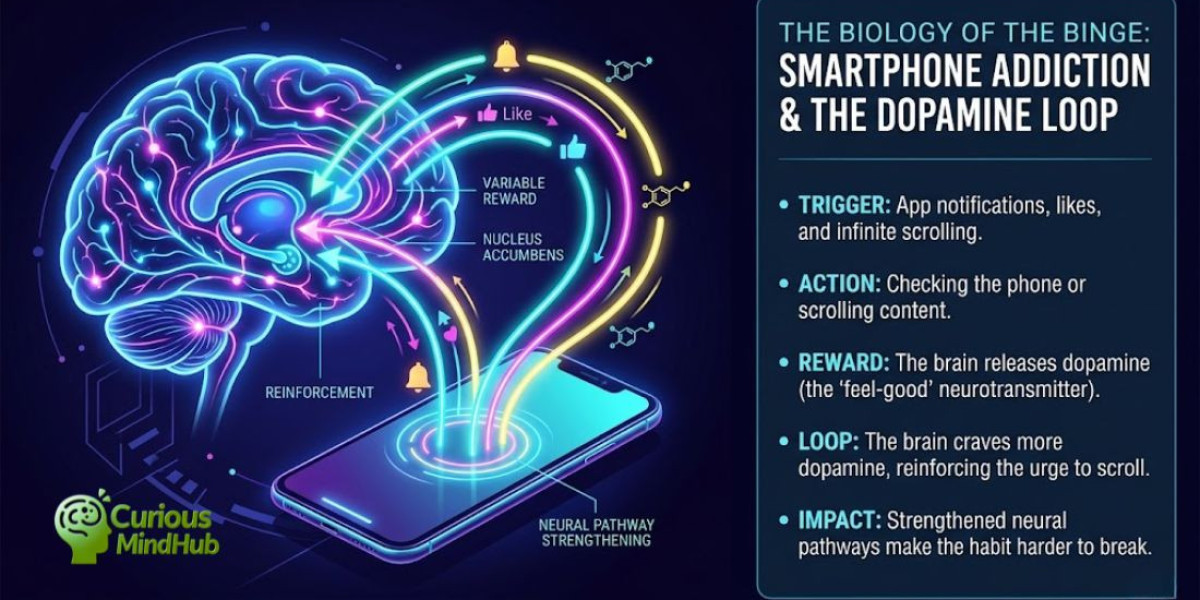
To understand why breaking away from our screens can feel so challenging, it helps to look under the hood at our biology. When we look at how dopamine loops affect the brain, we find a natural survival system that has been cleverley leveraged by modern software engineering. Dopamine is a chemical messenger responsible for anticipation, motivation, and drive. It doesn't actually create the feeling of satisfaction after an event; rather, it sparks the intense urge to seek out a reward.
┌──────────────────────────────────────┐│ CUE: A Moment of Boredom │└──────────────────┬───────────────────┘ │ ▼┌──────────────────────────────────────┐│ ACTION: Open App & Start Scrolling │└──────────────────┬───────────────────┘ │ ▼┌──────────────────────────────────────┐│ VARIABLE REWARD: An Interesting Post │└──────────────────┬───────────────────┘ │ ▼┌──────────────────────────────────────┐│ DOPAMINE SPIKE: Loop Recalibrates │└──────────────────────────────────────┘The neurobiology of infinite scrolling is designed specifically to keep this loop spinning. By removing traditional physical boundaries—such as the end of a page or a structured chapter—apps create an uninterrupted stream of data. Your brain stays locked in a state of perpetual anticipation, always waiting to see if the very next swipe will deliver something exciting.
The Power of the Variable Reward Schedule in Social Media
The reason a casual habit can quickly evolve into a persistent scrolling addiction comes down to a psychological concept called a variable reward schedule in social media. This operates on the exact same mathematical principle that makes slot machines so addictive.
If every single piece of content you looked at online was exceptionally interesting, your brain would eventually adapt to the excitement and get bored. If every post was entirely dull, you would close the app immediately. However, because the rewards are delivered randomly—meaning you have to look past five ordinary posts to find one genuinely hilarious video or meaningful update—your mind stays primed for the next hit of novelty. This unpredictable delivery system keeps you engaged far longer than you ever originally intended.
Deconstructing the Neuroscience of Habit
Many people talk about social media addiction as a personal failure or a lack of discipline. In reality, it is a predictable outcome when human biology meets highly optimized design. Through the lens of the neuroscience of habit, our brains are naturally wired to find the path of least resistance to a hit of excitement.
When you feel stressed, tired, or slightly bored, your brain remembers that pulling out your phone provides an immediate, effortless distraction. Over time, this action becomes completely automated, bypassing your conscious decision-making altogether. Signs that this loop has taken hold include:
Automatic Swiping: Opening an app and browsing for several minutes before realizing you even picked up your phone.
The "Just Two Minutes" Trap: Intending to check a single message and accidentally spending an hour watching short-form videos.
Reflexive Reaching: Checking your phone during every minor gap in conversation or the moment a task requires deep thought.
Practical Ways to Reduce Social Media Screen Time
Learning how to break a scrolling addiction doesn't require an all-or-nothing approach. Instead, it is about introducing small, highly sustainable boundaries that give your brain a chance to step off the dopamine treadmill.
Add Artificial Friction: Move your most tempting apps off your home screen and place them deep inside folders. Better yet, log out of your accounts after each use. The extra steps required to type in your credentials give your logical mind a moment to ask if you truly want to browse.
Utilize Visual and Audible Cues: Set an analog timer before opening an app to give yourself a clear, physical boundary for when your session is over.
Explore Analog Intermissions: Look for everyday ways to reduce social media screen time, such as keeping your phone entirely out of the bedroom overnight or leaving it in another room during family meals.
Rewiring Your Brain for Better Focus
Stepping back from high-frequency digital media allows your focus to naturally deepen. This process of rewiring your brain for better focus takes a bit of time and patience. When you first lower your daily screen time, you might feel a sudden wave of restlessness or a subtle fear of missing out.
Instead of treating this discomfort as a sign to immediately check your notifications, view it as a normal recalibration process. Your mind is simply adjusting to a lower, healthier, and more natural baseline of daily stimulation. Within a couple of weeks, this newly recovered space makes it much easier to immerse yourself in deep work, read books comfortably, and connect with people around you without feeling an underlying urge to check your pocket.
A Mindful Note on Digital Habits
Practicing digital minimalism, utilizing device boundaries, and taking intentional screen breaks are excellent lifestyle choices designed to support everyday focus, productivity, and general well-being. These habits are intended to foster a balanced relationship with modern technology and are not designed to diagnose, treat, or manage any medical or psychological conditions.
Conclusion
Reclaiming control over your daily attention is one of the most powerful steps you can take toward building a peaceful, focused life in the modern age. Stepping back from endless scrolling isn't about missing out on the world; it is about choosing to invest your energy into the real-world connections, personal goals, and quiet moments that truly enrich your journey. By bringing a few balanced habits of digital minimalism for mental health into your daily schedule, you provide your mind with the calm environment it needs to rest, think clearly, and thrive. For more actionable strategies, guides, and community insights on navigating digital culture with intention, visit the main hub of resources at Curious Mind Hub.
Frequently Asked Questions
What does digital minimalism look like in everyday practice?
Digital minimalism is a philosophy where you choose to use digital tools intentionally for specific, high-value tasks, rather than allowing them to become an automatic distraction. It involves customizing your digital environment so that your phone serves your lifestyle goals, rather than controlling your free time.
Why do infinite scroll features make it so hard to close an app?
Infinite scroll eliminates what psychologists call "stopping cues." In traditional media, arriving at the end of an article or closing a book forces you to stop and decide what to do next. Infinite feeds remove these natural breaks entirely, keeping your eyes moving and your mind waiting for the next piece of content without interruption.
How does reducing screen time benefit general focus?
When you step away from the rapid-fire stimulation of social media, your brain slowly builds back its capacity for sustained attention. Think of concentration like a physical muscle: the more you practice sitting through minor moments of boredom without reaching for a quick digital fix, the stronger and more resilient your everyday focus becomes.
What is a simple way to make social feeds less appealing to the brain?
A highly effective and simple tip is to change your smartphone's display settings to grayscale mode. Removing the bright, vibrant, and optimized colors from notifications and feeds immediately lowers the visual novelty, making the interface far less enticing to your brain's reward centers.