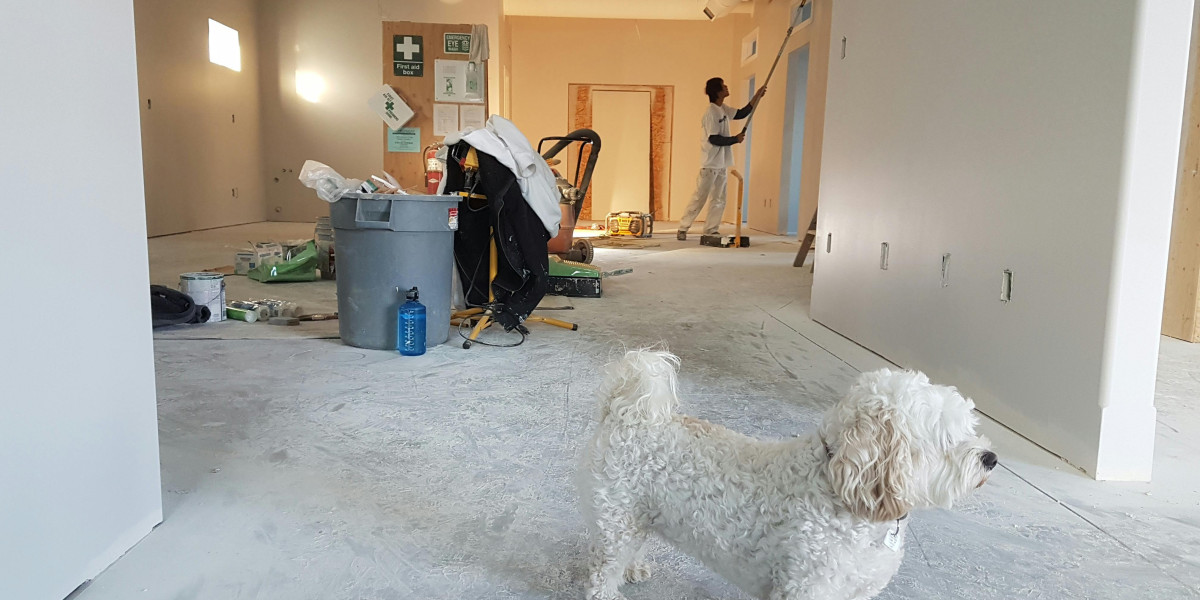
If you're doing a full "gut renovation" in Australia, a mid-to-high quality renovation will generally cost you around A$2,500 to A$5,000 per square metre. Lower-cost cosmetic upgrades will start from about A$1,800–A$2,500/m², and luxury full gut-and-refit projects will go even higher than A$5,000/m², depending on the extent, finishes, and whether there is any structural work. The costs of the renovation will be heavily influenced by the size of your house, which rooms are getting renovated (kitchen, bathroom, living spaces), and if you are doing just simple cosmetic refreshes or full structural and system overhauls.
Why Costs Change: Understanding Renovation Pricing in Australia
When Aussies make plans to renovate or "gut and rebuild" their home, the phrase "gut renovation" might mean drastically different things: just a cosmetic fix (paint, flooring, fixtures) or a complete overhaul (walls, wiring, plumbing, layout, finishes). That is the main reason for such a wide range of budgets.
In order to have a professional and precise prediction of the budget, a lot of homeowners decide to hire a construction estimating company Australia that could prepare a detailed cost‑estimation or takeoff. This process facilitates the capturing of labour, materials, compliance, and contingencies before the commencement of the work. Construction takeoff and construction estimation become very significant if the renovation includes structural modifications, plumbing/electrical rewiring, or major reconfigurations.
Typical Cost Ranges in 2025, What Australians Are Paying
Renovation Cost per Square Metre
Here’s a breakdown of expected cost per square metre based on renovation scope:
Renovation Quality / Scope | Low-End / Cosmetic (per m²) | Mid-Range (per m²) | High-End / Full Gut & Premium Finish (per m²) |
Basic refresh (paint, flooring, minor cosmetic) | A$1,800 – A$2,500 | , | , |
Mid-range renovation (some layout tweaks, better finishes) | , | A$2,500 – A$4,000 | , |
High-end / complete renovation (gut + full rebuild + premium materials) | , | ~A$3,000 – A$5,000+ | A$4,000 – > A$5,000 (depending on scope) |
When it comes to full-house renovations or gut-to-rebuild jobs, the total budgets are most of the time between A$150,000 and A$600,000+ based on the size of the house and the level of finish.
Small refreshes, for instance, the updating of the flooring, painting, and maybe some fixtures, might be as low as A$20,000–A$50,000 in cost.
Typical Room-by-Room / Project-Part Costs
The different parts of a home have different cost expectations. Here are some rough benchmarks that can be seen across Australia (2025):
Kitchen renovations: The cost of a basic to mid-range kitchen is about A$10,000–A$50,000, and the main factors affecting the price are the number of cabinets, benchtops, appliances, and whether the layout is changed. A kitchen in the premium/luxe category (with the use of custom cabinetry, layout redesign, and high-end fixtures) can cost anywhere from A$50,000 to over A$75,000.
Bathroom renovations: Standard bathroom changes, such as new tiling, fixtures, and waterproofing, usually range between A$8,000 and A$30,000+. Comprehensive rebuild or luxury bathroom issues will increase the money required.
Bedrooms/living & common areas: If you are thinking of flooring, painting, built-ins, or minor structural tweaks, the budget might be between A$5,000 and A$25,000–A$30,000.
Whole‑house / major renovations: A major renovation with multiple rooms involved, structural changes, or reconfiguration will cost between A$150,000 and A$300,000+, depending on the home size, complexity, and level of finish.
What Drives the Cost: Key Factors to Know
1. Scope of Work & Structural Changes
A mere repainting and replacement of floor coverings would be a relatively inexpensive job. However, costs go up quickly if you are tearing down walls, re-routing wiring/plumbing, changing layouts, or extending parts of your house.
2. Quality of Materials & Finishes
Using simple wall paint and budget-friendly flooring will keep the expenditure on the lower side. However, the choices of premium tiles, benchtops made of stone, cabinetry made to measure, designer fixtures, or bespoke finishes will raise both the labour and material costs significantly.
3. Labour & Regional Variations
Rates for renovation labour are not the same everywhere and depend on the region. For example, metropolitan areas generally have higher labour and material costs in comparison to regional areas.
4. Services: Plumbing, Electrical, Permits, Compliance
Plumbing upgrades, rewiring, building code compliance, getting permits, and inspections often make up a large portion of the total cost of a full gut renovation. Accurate planning at this stage depends heavily on mechanical takeoffs, which help estimate material quantities and labour needs, reducing unexpected expenses and delays during construction.
5. Waste Removal, Demolition, and Clean-Up
If you are planning a gut renovation, it means you are going to take down the existing structure, remove the debris, transport it to the dump, and maybe deal with asbestos or other old-house hazards. Consequently, these indirect costs (waste removal, site prep) should not be overlooked.
6. Contingency for Unknowns
It is not unusual for older homes to have issues such as concealed structural weaknesses, water damage, termite damage, and outdated wiring. It is always wise to keep a contingency (usually 10–20%) as a reserve for unexpected events.
7. Design, Planning & Estimation Accuracy
One of the ways to avoid cost overruns is by using an accurate estimation service, such as a dedicated Estimating Company Australia, which offers precise construction takeoff, material, and labour estimates. A proper estimate covers every aspect of the project (materials, labour, regulatory costs, waste, contingency).
How to Plan & Estimate Smartly: A Step-by-Step Approach
Firstly,you need to measure the total area (in m²) of the house that you intend to renovate, whether it would be the entire home or just some selected rooms.
Next, you should define the scope and finish level, deciding whether it would be a cosmetic refresh, a mid-range overhaul, or a high-end full gut + refit.
Then, you could apply typical per‑m² rates (as mentioned earlier) to come up with an initial ballpark figure.
Enumerate the needs that you have for each room (kitchen, bathroom, bedrooms, living area), and then use room-level cost benchmarks to get more accurate figures for your budget.
Get in touch with an Estimating Company Australia or a similar estimator. Get a detailed construction takeoff, including materials, labour, permits, waste, and contingency.
In case there is involvement of structural work, plumbing, electrical, or specialised finishes, you should get multiple quotes from contractors/tradespeople before making a decision.
Adding buffer/contingency (10–20%) is very important as it can handle unexpected costs or delays.
Planning priorities: What is most essential should be done first (structure, plumbing, wiring), and then the next step would be finished, this point being especially important if there is a restriction of budget or time.
Pros & Cons
Pros
You keep the location and your current home's footprint (no need to purchase land).
The layout, systems(plumbing, wiring), and even the manner of the materials used can be updated for a very small portion of the money/time it takes to build a completely new one.
Renovation, if done properly, has the potential to increase not only the market value but also the liveability of your home and is, in most cases, more cost-efficient than building a custom home from scratch.
Flexibility: one can decide to do only the structurally essential (structure, systems) work first and later finish, or simply upgrade by giving a touch of cosmetics to another stage.
Cons / Challenges
Initial costs are considerably higher than what you would need for carrying out simple cosmetic updates.
Unpredicted costs arise in a risk manner (for example: hidden damage, compliance issues, structural problems), which is especially accurate for old houses.
There is increased pressure and work involved in such an undertaking, as well as more complicated logistics: you need to coordinate workers, handle demolition, plan, get permits, and also manage disposal.
On the flip side, if quality is your decision, cutting corners (cheaper equipment, less professional work) may affect you negatively through low value long-term, and even having to do additional work.
Tips for Australians Planning a Gut Renovation
Make sure that every quote that comes your way is detailed and itemised, and not just vague lump sums. This serves as a way to prevent surprises and also spot if some parts of the line (materials, labour, and miscellaneous) are overpriced.
Hire a construction takeoff/estimation service (e.g., a reputable Estimating Company Australia) to help you break down the job accurately.
Talk over more than one quote before making up your mind, and the gaps in prices between contractors carrying out the same job can be a staggering amount.
Be prepared for work not going as planned and for additional costs, material, labour shortages, permit delays, and bad weather, which can increase the cost and extend the duration of the project.
Don't skimp on the structural integrity, plumbing, electrical, and waterproofing if you want to be sure of your cosmetic finishes; the former are very expensive to fix.
Put aside a reserve fund equalling a minimum of 10–20% of the budget that you estimated.
In case you only have limited finances, choose to carry out mid‑range renovations that provide both the visual side and the necessary aspects of the house updated, rather than going straight to luxurious high-end finishing.
Conclusion
Renovating or “gut‑renovating” your home in Australia can be a smart way to modernise, improve functionality, and increase value, often at a lower cost and less time than building a new home from scratch. But the key to success lies in accurate estimation, careful planning, and realistic budgeting.
The first important steps are to use a professional cost estimator or takeoff service, get detailed quotes, and understand the real costs per square metre. Equally important is being realistic about what you want (cosmetic update vs. full gut and refit), planning for unknowns, and prioritising structural, plumbing, and electrical work before cosmetic finishes.
FAQ
1. What is a gut renovation?
A gut renovation means taking a property right back down to its bare frame. This involves tearing out walls, flooring, fixtures, plumbing, and electrics, basically, the whole area is being rebuilt from the ground up.
2. What is the cost of a gut renovation in Australia?
In Australia, a gut renovation is generally between AUD $2,000 and $4,000 per m², with the exact price dependent on the materials, labour, structural changes, and location.
3. How long will a full gut renovation be?
The majority of gut renovations are completed within 3–8 months, and their duration is determined by the availability of approvals, trades, and the extent of the project.
4. Is council approval required for a gut renovation?
If you are making structural changes, then certainly yes. For non-structural internal works, usually, no permission is required, but it differs from state to local council.
5. What are some ways I can still afford to renovate?
Get your plans sorted early, employ precise construction takeoffs and estimates, save some of the materials for later use, and hire professionals who will help you avoid expensive mistakes.